You've Heard That Humans Only Use 10 Percent of Their Brains. Neuroscientists Have Thoughts About That.
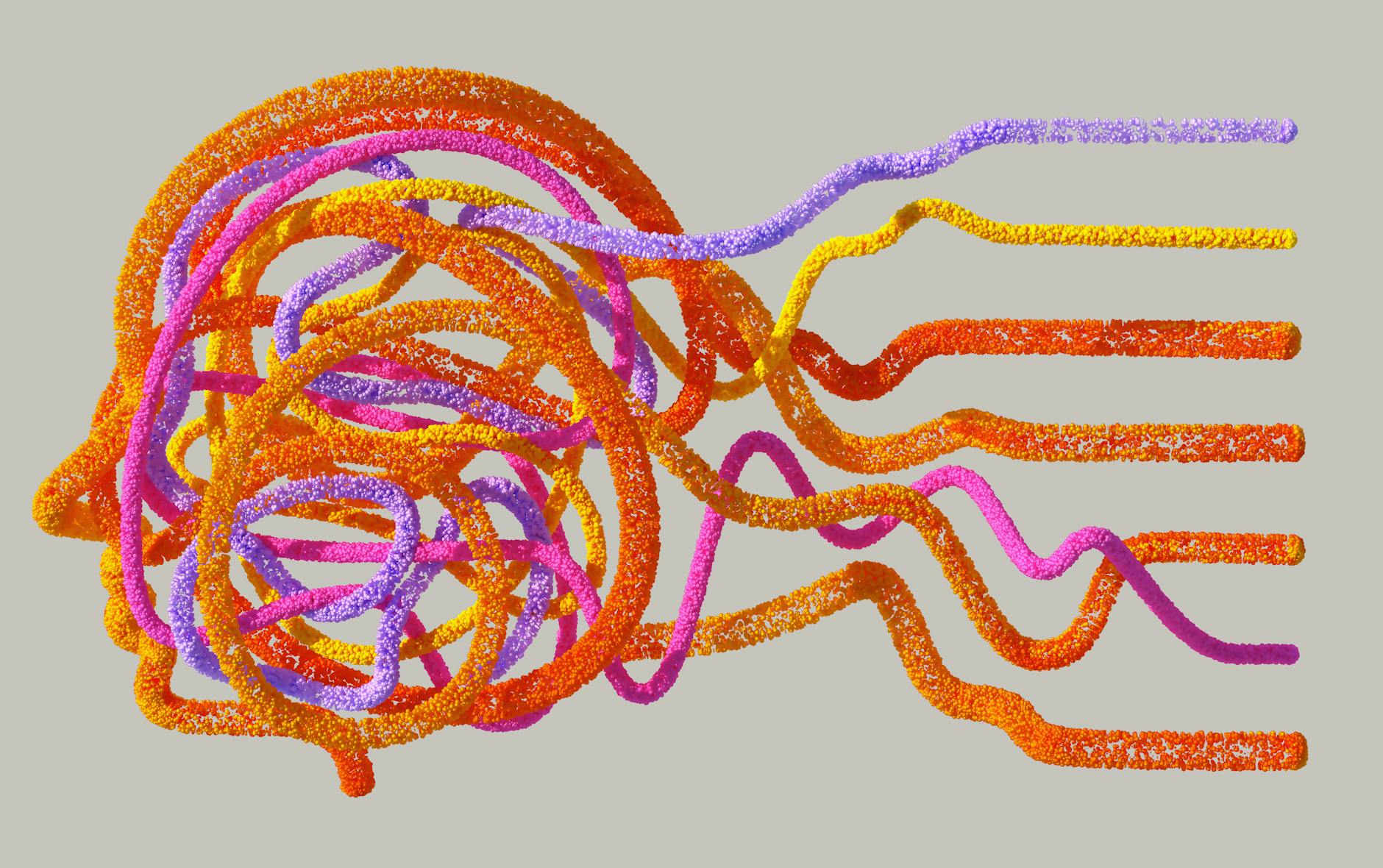
You've Heard That Humans Only Use 10 Percent of Their Brains. Neuroscientists Have Thoughts About That.
The pitch is irresistible. Somewhere inside your skull, 90 percent of your brain sits idle — a vast, untapped reservoir of intelligence and ability just waiting to be unlocked. Learn the right technique, take the right supplement, follow the right program, and you could access capabilities you never knew you had.
It's a compelling idea. It's also, according to virtually every neuroscientist working today, completely wrong.
The 10 percent brain myth is one of the most thoroughly debunked beliefs in all of modern science — and yet it keeps circulating, keeps selling books, and keeps showing up in movies. Understanding why it's false, and why it refuses to die, turns out to be its own fascinating story.
Where Did This Idea Come From?
The origin of the 10 percent claim is genuinely murky, which is part of what makes it so hard to pin down and correct. Several different sources have been blamed over the years, and the truth is probably that the myth is a composite — a belief assembled from multiple misquoted and misunderstood sources over more than a century.
One frequently cited origin involves the early 20th century psychologist William James, who wrote about humans rarely achieving their full mental potential. That's a philosophical observation about motivation and effort — not a neurological claim about which brain tissue is active. But in the retelling, it apparently morphed into something more literal.
Albert Einstein's name gets attached to the claim constantly, though there's no credible evidence he ever said it. The association probably persists because attaching a genius's name to a myth about hidden mental potential makes the story more appealing. If even Einstein believed it...
The self-help industry picked up the idea enthusiastically in the latter half of the 20th century. If people believed most of their brain was dormant, then the promise of unlocking it became an incredibly effective marketing hook. Books, seminars, memory training courses, and various wellness products all found the myth useful. Repetition did the rest.
What Brain Imaging Actually Shows
Modern neuroscience has tools that simply didn't exist when this myth took hold. Functional MRI (fMRI) technology allows researchers to observe brain activity in real time, tracking which regions are consuming oxygen and glucose as a person performs different tasks. What they've found is unambiguous: the brain is remarkably active across its full structure.
Different regions specialize in different functions — the visual cortex processes what you see, the motor cortex coordinates movement, the prefrontal cortex handles complex reasoning and decision-making, the hippocampus is central to forming memories — but there is no large section of the brain simply sitting unused. Even during sleep, significant portions of the brain remain highly active, consolidating memories, regulating body systems, and processing information.
Neuroscientists point out that the 10 percent idea also doesn't survive basic evolutionary logic. The human brain accounts for about 2 percent of body weight but consumes roughly 20 percent of the body's total energy. That's an enormous metabolic investment. Evolution doesn't tend to maintain expensive tissue that serves no function. If 90 percent of the brain were truly dormant, natural selection would have found a way to trim it down over millions of years.
The Hollywood Problem
Few things have given the 10 percent myth more staying power than its repeated appearance on screen. The 2014 film Lucy, starring Scarlett Johansson, built its entire premise around a character who gains superhuman abilities by accessing progressively more of her brain. The movie was a significant box office success. The 2011 film Limitless told a nearly identical story through a different lens.
These films aren't documentaries, of course, and most viewers understand they're watching science fiction. But the repeated cinematic reinforcement of the idea — presenting it as a premise rather than questioning it — keeps the concept circulating in popular culture in a way that feels vaguely credible. When something appears in enough movies, it starts to feel like it must be based on something.
What We Actually Know About Brain Capacity
Here's where the real story gets genuinely interesting. The brain doesn't operate at full throttle all the time — but that's by design, not because most of it is inactive. Different tasks recruit different neural networks, and the brain is extraordinarily efficient at allocating cognitive resources based on what's needed at any given moment.
Attention, for instance, is a limited resource that the brain carefully manages. You can't deeply focus on multiple complex tasks simultaneously — not because your brain lacks capacity, but because sustained attention requires significant energy and the brain prioritizes accordingly. This is why distracted driving is dangerous even for intelligent, capable people. It's not a failure of untapped potential; it's the brain operating exactly as it was designed to.
Neuroplasticity — the brain's ability to reorganize and strengthen connections in response to learning and experience — is the real story of human mental potential. When you learn a new skill, practice a musical instrument, or study a new language, you're not unlocking dormant regions. You're actively reshaping neural pathways and building new connections. The capacity for that kind of change is remarkable and, genuinely, not fully understood. That's a far more honest and interesting version of the "untapped potential" story.
Why the Myth Keeps Winning
The 10 percent myth survives because it offers something psychologically comforting: the idea that our limitations aren't real limitations, just locked doors waiting for the right key. That's a more hopeful story than the truth, which is that the brain is already working hard and improvement comes through sustained effort and practice rather than sudden unlocking.
The self-help industry understands this well. A product that promises to help you work harder and practice more deliberately is a much harder sell than one that promises to flip a switch on hidden capacity.
The Takeaway
Your brain is not 90 percent idle. It is a dense, energy-hungry, extraordinarily complex organ that is active across virtually all of its regions throughout your waking life — and much of your sleeping life too. The real story of human cognitive potential isn't about unlocking dormant tissue. It's about neuroplasticity, deliberate practice, and the genuinely remarkable adaptability of a brain that's already fully online.