The Antibacterial Promise That Built an Empire — While Plain Soap Kept Outperforming It
Walk into any American office, school, or store today and you'll find dispensers of hand sanitizer mounted on walls like modern-day holy water fonts. We pump the clear gel into our palms with the confidence that we're deploying advanced germ-fighting technology. After all, if it kills 99.9% of bacteria, it must be better than that old-fashioned bar of soap sitting by the sink, right?
Not exactly. And the story of how we got here reveals one of the most successful marketing campaigns in modern health history.
When Hospitals Needed a Quick Fix
Hand sanitizer didn't start as a consumer product. In the 1960s, alcohol-based gels were developed for hospitals where healthcare workers needed to disinfect their hands quickly between patients. Soap and water required time — time to walk to a sink, scrub for the recommended duration, and dry thoroughly. In fast-paced medical settings, sanitizer offered a practical compromise.
The key word there is compromise. Even in hospitals, sanitizer was never meant to replace handwashing entirely. It was a backup plan for situations where soap and water weren't immediately available.
The Great Migration to Main Street
By the 1990s, companies began marketing sanitizer to everyday consumers. The pitch was irresistible: all the germ-killing power of handwashing, but faster and more convenient. No sink required. No wet hands. Just squeeze, rub, and go.
Americans embraced the idea enthusiastically. We installed dispensers in our cars, carried pocket-sized bottles in our purses, and began reaching for sanitizer dozens of times per day. The message was clear: more sanitizing meant better protection.
But research labs were telling a different story.
What the Science Actually Shows
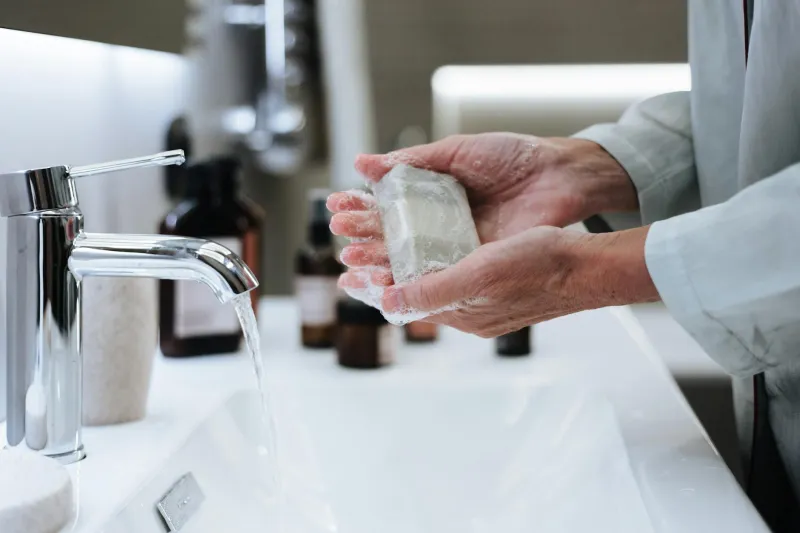
Study after study has demonstrated that plain soap and water removes more pathogens than alcohol-based sanitizers. Soap doesn't just kill germs — it physically removes them from your skin, washing them down the drain along with dirt, oils, and dead skin cells.
Sanitizer, by contrast, kills many bacteria and viruses but leaves their dead remnants on your hands. It's also less effective against certain types of pathogens, including norovirus (the stomach flu), C. diff bacteria, and some parasites. When your hands are visibly dirty, sanitizer essentially creates a layer of clean-looking grime.
Dr. Sarah Chen, an infectious disease specialist at Johns Hopkins, puts it simply: "Soap and water is the gold standard. It's been the gold standard for over a century. Sanitizer is what we use when we can't get to soap and water."
 Photo: Dr. Sarah Chen, via cdn.tatlerasia.com
The Convenience Trap
So why did sanitizer become America's go-to germ defense? The answer lies in our relationship with convenience.
Sanitizer companies didn't just sell a product — they sold a lifestyle. Their marketing suggested that busy, successful people couldn't afford the time for old-fashioned handwashing. Sanitizer became a symbol of efficiency, a way to stay healthy without slowing down.
This messaging was particularly powerful because it aligned with American values of innovation and progress. Surely this new technology was better than something as simple as soap?
When Marketing Meets Psychology
The sanitizer industry also tapped into something deeper: our desire for control over invisible threats. Germs are everywhere, but we can't see them. Sanitizer gave us a ritual that felt like taking action against an unseen enemy.
The "kills 99.9%" claim became a security blanket. Never mind that soap removes 100% of germs by washing them away — the specific percentage made sanitizer feel more scientific, more precise.
The Real Rules of Germ Defense
Here's what infectious disease experts actually recommend:
Use soap and water whenever possible. Scrub for 20 seconds (about as long as it takes to hum "Happy Birthday" twice), paying attention to fingertips, between fingers, and under nails.
Reach for sanitizer only when soap isn't available — like after touching a gas pump or before eating at a picnic. Choose products with at least 60% alcohol content.
Don't rely on sanitizer if your hands are visibly dirty. No amount of alcohol gel will clean off actual grime.
The Billion-Dollar Habit
The hand sanitizer industry now generates over $2.5 billion annually in the United States alone. We've built an entire infrastructure around a product that was originally designed as a temporary substitute.
This isn't to say sanitizer is useless — it serves an important purpose when soap isn't available. But somewhere along the way, the backup plan became the primary strategy.
The Takeaway
The next time you're deciding between the sink and the sanitizer dispenser, remember that the simpler option is usually the better one. Soap and water has been protecting humans from disease for thousands of years, and despite all our modern innovations, we haven't improved on that basic formula.
Sometimes the old way really is the best way — even if it doesn't come with a convenient pump dispenser.