The 20-Second Rule Changed Everything We Thought We Knew About Washing Our Hands
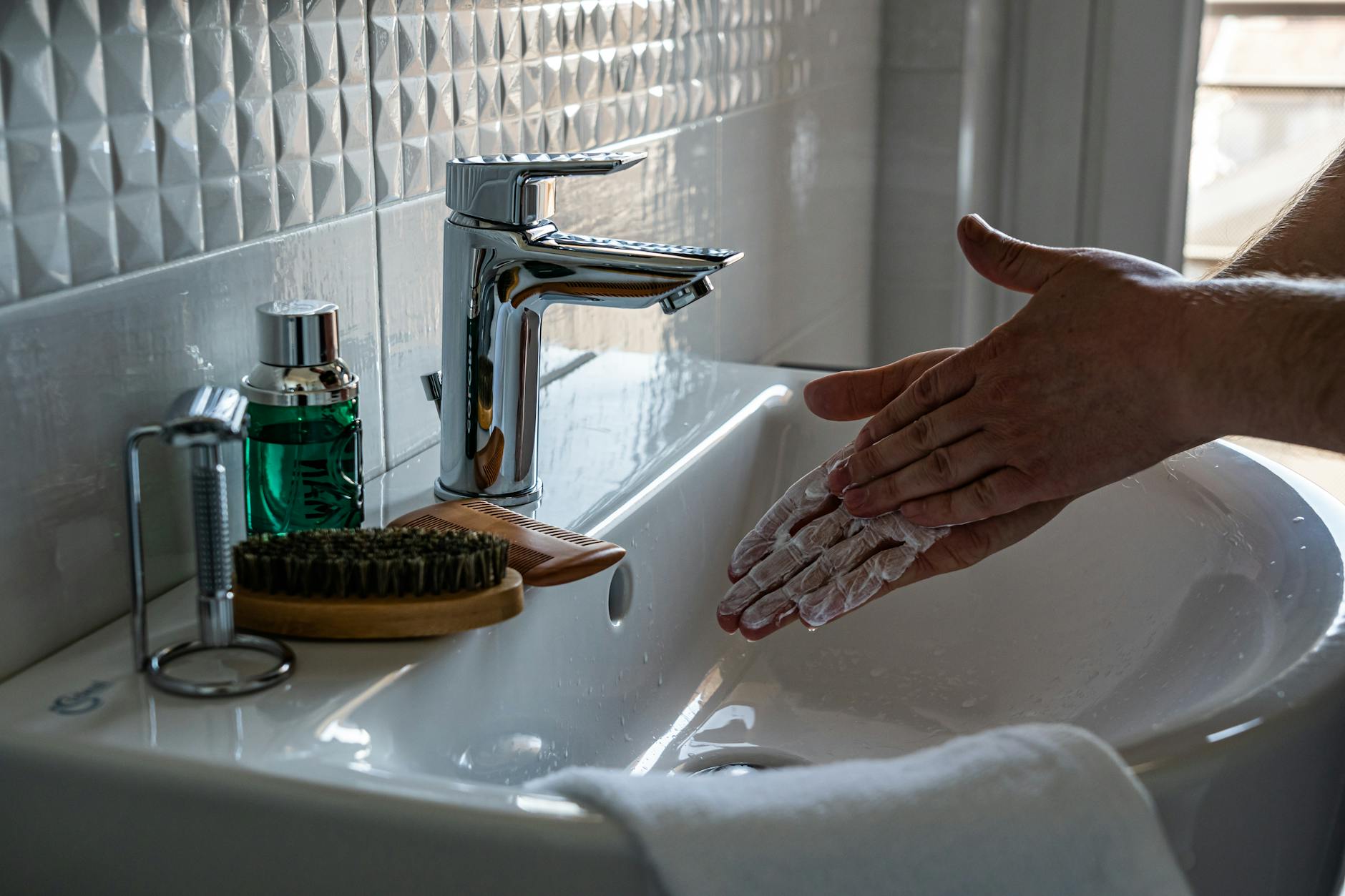
The 20-Second Rule Changed Everything We Thought We Knew About Washing Our Hands
Hand washing is one of those habits most Americans consider completely solved. You've been doing it since kindergarten. You know the drill: turn on the tap, add soap, rinse, done. It feels almost insulting to suggest you might be getting it wrong.
But according to the CDC, most people are — and not in a minor, technical way. The gaps in how Americans actually wash their hands versus how they should have real consequences for how effectively germs are removed. The good news is that once you understand what's really happening at the sink, the fix is surprisingly simple.
Where the 20-Second Rule Actually Comes From
You've probably heard that you're supposed to wash your hands for at least 20 seconds. What most people don't know is where that number came from — and it's not as arbitrary as it sounds.
The guideline traces back to research on mechanical friction and pathogen removal. Soap doesn't actually kill most germs the way a lot of people imagine. What it does is surround bacteria and viruses with molecules that make them easier to physically lift off your skin. The scrubbing motion is what does the heavy lifting — soap just makes it possible. Twenty seconds gives you enough time to work that friction across all the surfaces of your hands thoroughly enough to make a real difference.
The problem? Most people dramatically underestimate how long 20 seconds actually feels when you're standing at a sink. Studies have found that the average American spends somewhere between 6 and 11 seconds washing their hands. That's not even close. Public health researchers have long used the trick of humming "Happy Birthday" twice as a rough timer — and even that feels longer than most people expect when they try it.
It's not that people are being careless. It's that 20 seconds at a sink feels like a surprisingly long time when you're in the middle of your day.
The Spots You're Almost Certainly Missing
Duration is only part of the picture. The CDC also points out that most people consistently miss several areas of their hands during routine washing — and those gaps aren't random.
The backs of the hands, the spaces between fingers, the area around and under fingernails, and the thumbs are the most commonly skipped zones. That last one tends to surprise people. Thumbs are used constantly but tend to get neglected during washing because the natural rubbing motion most people use focuses on the palms.
Proper technique, according to public health guidelines, involves lathering the backs of both hands, interlacing fingers to clean between them, scrubbing around the thumbs, and getting under fingernails — ideally by rubbing them against the opposite palm. It's more deliberate than most people's instinctive rinse-and-go approach, but it doesn't require any special equipment or extra products.
The Antibacterial Soap Myth
Here's where things get genuinely surprising for a lot of people: that antibacterial soap you've been using — the kind marketed as more powerful and protective — almost certainly isn't giving you any meaningful advantage over plain soap.
In 2016, the FDA banned 19 antibacterial ingredients from consumer hand soaps after manufacturers failed to demonstrate that their products were either more effective or safer than regular soap and water. The primary ingredient in most antibacterial soaps, triclosan, was among those banned for consumer use.
The reason plain soap works so well has nothing to do with killing germs chemically. It works because of soap's physical properties — the way it interacts with the oils on your skin and the outer membranes of bacteria and viruses, making them easier to wash away. That process works just as effectively with a basic drugstore bar of soap as it does with any specialty formula.
The antibacterial soap market became enormous in the 1990s, driven largely by savvy marketing and a cultural anxiety about germs that intensified during that era. The idea that more powerful meant more protection was intuitive and easy to sell. It just wasn't backed up by the science.
Why This Misconception Has Stuck Around
Part of what makes hand washing such a fertile ground for misunderstanding is that it feels so familiar. We've been doing it our whole lives, which creates a strong sense of competence — even when the actual technique hasn't been examined in years.
There's also the fact that the consequences of doing it wrong aren't always immediately visible. You wash your hands improperly, and you don't get sick that day, or that week, and the habit gets reinforced. The connection between technique and outcome is too indirect for most people to notice without being explicitly taught.
Public health messaging has also historically focused more on whether people wash their hands than on how. Campaigns emphasizing frequency were everywhere; detailed technique guidance was mostly confined to medical settings.
The Simple Takeaway
You don't need special soap, a fancy technique, or a timer on your phone. What you need is about 20 real seconds — longer than you think — and enough attention to make sure you're covering the whole hand, not just the palms.
The next time you're at the sink, try actually counting it out. Odds are good it'll feel longer than you expect. That's the whole point.