
The Sound That Triggers Universal Warnings
CRACK. The distinctive pop of knuckles being stretched echoes across a quiet room, and immediately someone — a parent, teacher, friend, or random stranger — delivers the warning with absolute certainty: "Stop that! You'll get arthritis!" It's one of the most universally shared pieces of health advice in American culture, passed down through generations with the confidence of established medical fact.
But one California physician got so tired of hearing this warning repeated without evidence that he decided to test it himself. For sixty years.
Dr. Donald Unger's Unprecedented Self-Experiment
Dr. Donald Unger, an allergist and immunologist, began his unusual research project in 1950 when he was still a teenager. Frustrated by his mother's constant warnings about knuckle cracking causing arthritis, he designed what may be the longest-running controlled experiment in modern medicine.
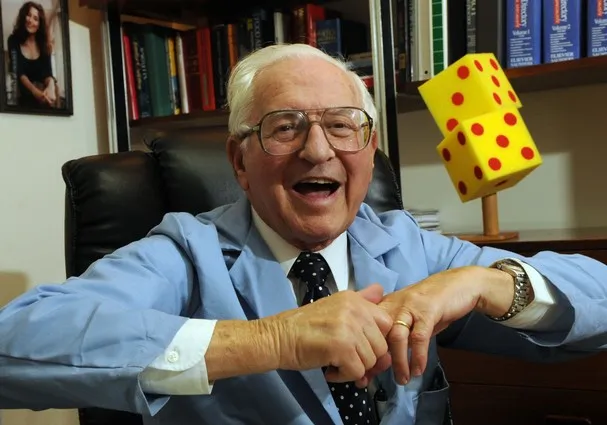 Photo: Dr. Donald Unger, via nowiknow.com
His methodology was elegantly simple: crack the knuckles on his left hand at least twice daily for sixty years, while never cracking the knuckles on his right hand. If the arthritis warning was true, his left hand should develop significantly more joint problems than his right hand over time.
Unger maintained this routine through medical school, residency, decades of medical practice, and retirement. Every day for six decades, he systematically cracked the knuckles on one hand while preserving the other as a control group.
The Results That Surprised No One (Except Maybe His Mother)
In 2009, at age 83, Dr. Unger published his findings in the journal Arthritis & Rheumatism. After sixty years of deliberate knuckle cracking on one hand, he found no difference in arthritis development between his hands. Both hands showed normal age-related joint changes, but neither demonstrated the accelerated arthritis that popular wisdom predicted.
 Photo: Arthritis & Rheumatism, via c8.alamy.com
The study earned Dr. Unger the 2009 Ig Nobel Prize in Medicine, an award recognizing scientific achievements that "first make people laugh, and then make them think." While the Ig Nobel Prizes often celebrate unusual research, Unger's work addressed a genuinely widespread medical misconception.
 Photo: Ig Nobel Prize, via improbable.com
What Actually Happens When You Crack Your Knuckles
The distinctive popping sound comes from a process called cavitation. Your finger joints contain synovial fluid, which lubricates the joint and contains dissolved gases, primarily nitrogen. When you stretch or bend your fingers in certain ways, the pressure in the joint space decreases rapidly.
This pressure drop causes dissolved gases to form bubbles in the synovial fluid. When these bubbles collapse, they create the characteristic popping sound. It's essentially the same physics that causes champagne corks to pop — rapid pressure changes creating sudden gas bubble formation and collapse.
The process is entirely mechanical and doesn't involve bone grinding against bone, cartilage damage, or any of the joint destruction mechanisms that actually cause arthritis.
The Real Science on Joint Cracking and Arthritis
Multiple large-scale studies have investigated the supposed connection between habitual knuckle cracking and arthritis development. A 1990 study published in the Annals of the Rheumatic Diseases examined 300 people over age 45, comparing arthritis rates between habitual knuckle crackers and non-crackers. The researchers found no statistical difference in arthritis development between the groups.
Another study, published in the Journal of the American Board of Family Medicine in 2011, reviewed decades of research on joint manipulation and arthritis. The authors concluded that no credible evidence supports a connection between knuckle cracking and arthritis development.
Some studies have even suggested that people who regularly crack their knuckles may have slightly better grip strength and hand function, possibly due to increased joint mobility. However, these findings are preliminary and don't constitute medical recommendations for knuckle cracking.
Why the Myth Became Universal Medical Advice
The knuckle-cracking-causes-arthritis belief likely persists for several psychological and social reasons. The popping sound seems unnatural and potentially harmful to many people, triggering instinctive concern about joint damage. Parents naturally want to discourage habits that might harm their children's health, even when the perceived threat isn't scientifically supported.
The myth also benefits from confirmation bias. People who develop arthritis later in life and remember cracking their knuckles may assume a causal relationship, even though arthritis has complex genetic, environmental, and age-related causes that have nothing to do with joint popping.
Additionally, some people find the sound of knuckle cracking annoying or disturbing. Framing it as a health risk provides a socially acceptable way to ask others to stop the behavior, even when the real motivation is simply noise aversion.
What Actually Causes Arthritis
Arthritis develops from inflammation and breakdown of cartilage in joints. The most common form, osteoarthritis, results from normal wear and tear over time, genetic predisposition, previous injuries, and sometimes obesity that places extra stress on weight-bearing joints.
Rheumatoid arthritis, an autoimmune condition, occurs when the body's immune system mistakenly attacks joint tissue. Other forms of arthritis can result from infections, crystal deposits, or other systemic diseases.
None of these arthritis-causing mechanisms have any connection to the mechanical process of gas bubbles forming and collapsing in synovial fluid.
The Broader Implications of Unger's Experiment
Dr. Unger's six-decade self-experiment represents more than just debunking a common myth. It demonstrates the importance of testing widely accepted beliefs against actual evidence, even when those beliefs seem harmless or are delivered with good intentions.
His work also highlights how medical myths can persist for generations without scientific scrutiny. The knuckle-cracking warning was so universally accepted that formal research on the topic didn't begin until the late 20th century, decades after the belief had become entrenched in popular culture.
Modern Perspectives on Joint Health
Today's orthopedic specialists and rheumatologists generally view knuckle cracking as a benign habit with no long-term health consequences. Some practitioners note that excessive or forceful joint manipulation could potentially cause injury, but normal knuckle cracking falls well within the range of typical joint movement.
The medical community's current focus on joint health emphasizes maintaining flexibility through regular movement, protecting joints from injury during physical activities, and managing systemic factors like inflammation and autoimmune conditions that actually contribute to arthritis development.
The Takeaway
Dr. Unger's remarkable sixty-year experiment definitively answered a question that millions of people have wondered about but few have tested scientifically. His findings align with multiple large-scale studies showing no connection between knuckle cracking and arthritis development.
The next time someone warns you about arthritis risks from cracking your knuckles, you can share the story of a physician who literally spent his entire adult life testing that exact claim. His conclusion? Your mother was wrong about this one — though she was probably right about plenty of other things.
Sometimes the most confidently delivered health warnings are the ones most worth questioning, especially when they're based more on assumption than evidence.