The Left Brain / Right Brain Divide Feels Real. Brain Scans Tell a More Interesting Story.
The Left Brain / Right Brain Divide Feels Real. Brain Scans Tell a More Interesting Story.
At some point in the last few decades, left-brain and right-brain became personality types. You'll find the framework in workplace assessments, creativity workshops, self-help books, and the kind of online quiz you take on a Tuesday afternoon when you're supposed to be doing something else. The premise is intuitive and clean: the left hemisphere handles logic, language, and analytical thinking; the right hemisphere handles creativity, emotion, and intuition. Accountants are left-brained. Artists are right-brained. Take the quiz and find out which one you are.
It's a satisfying framework. It just doesn't hold up particularly well under a brain scanner.
The Real Discovery That Started All of This
To be fair to the myth, it didn't emerge from nowhere. The left-brain/right-brain idea has roots in genuine, Nobel Prize-winning neuroscience. In the 1960s, researcher Roger Sperry conducted landmark studies on patients who had undergone a procedure called a corpus callosotomy — a surgery that severed the corpus callosum, the thick bundle of nerve fibers connecting the brain's two hemispheres. These patients, often called split-brain patients, were treated for severe epilepsy.
Sperry's experiments revealed something remarkable: when the two hemispheres couldn't communicate, they appeared to have distinct capabilities. The left hemisphere showed stronger involvement in language processing. The right hemisphere demonstrated strengths in spatial tasks and recognizing faces. This was a genuine and important finding, and Sperry received the Nobel Prize in Physiology or Medicine in 1981 for his work.
But here's where the story gets complicated: the leap from "these two hemispheres have some specialized functions" to "people are either left-brained or right-brained" is a dramatic oversimplification — one that the science has never actually supported.
What Brain Imaging Actually Shows
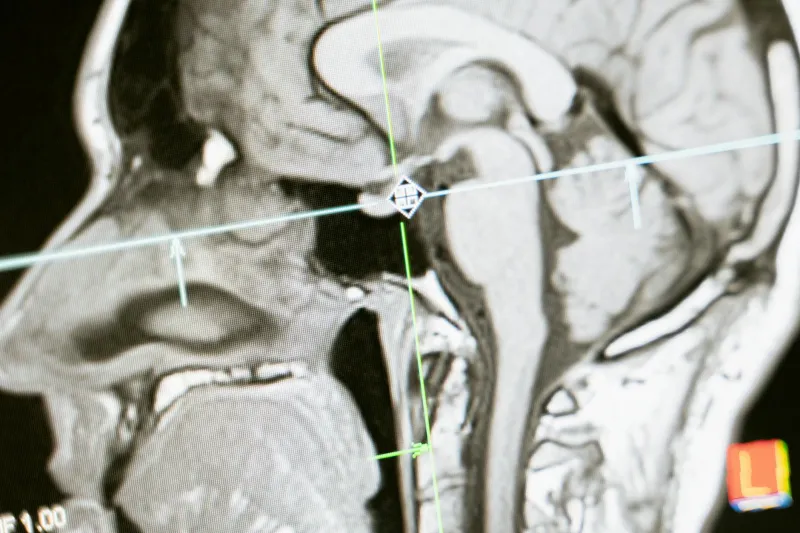
Modern neuroimaging technology, particularly functional MRI (fMRI), allows researchers to observe brain activity in real time as people perform various tasks. What those scans consistently reveal is that almost no cognitive task activates just one hemisphere. Reading, solving math problems, listening to music, making decisions, experiencing emotions — all of these activities light up regions across both hemispheres simultaneously.
A large-scale study published in 2013 by researchers at the University of Utah examined brain scans from more than 1,000 people and specifically looked for evidence that individuals showed a consistent dominance of one hemisphere over the other. They found no such pattern. People did not cluster into left-brain dominant and right-brain dominant groups. Both hemispheres were used roughly equally across the sample, and there was no evidence that someone who used their left hemisphere more for one task would consistently use it more for other tasks.
The lead researcher, Jeff Anderson, summarized it directly: "It's not the case that the left hemisphere is associated with logic or reasoning more than the right, or that the right hemisphere is associated with creativity or the arts."
How a Real Finding Became a Personality Myth
So if the science was always more nuanced, how did the pop psychology version get so entrenched? A few forces were at work.
First, Sperry's findings were genuinely exciting and got significant media coverage in the 1970s. Science journalism at the time — as is sometimes still the case — translated complex findings into the cleanest possible narrative. "The two sides of your brain do different things" became "you are dominated by one side of your brain," which became "your personality type is determined by which side dominates."
Second, people want this framework to be true. Human beings are natural categorizers, and the left-brain/right-brain split offers a flattering, binary way to understand yourself and others. It explains why you're better at art than math, or why your colleague seems so analytical while you're more intuitive. It gives people a vocabulary for differences they genuinely observe — it just misidentifies the mechanism.
Third, the framework proved commercially useful. Personality assessments, corporate training programs, and educational curricula built around the left-brain/right-brain model generated real revenue. Once an idea is embedded in professional development culture, it tends to persist long after the science has moved on.
What Brain Science Actually Says About Creativity and Logic
The more accurate picture of human cognition is less tidy but considerably more interesting. Creativity, for instance, isn't localized to the right hemisphere — it involves a complex interplay between multiple brain networks, including what researchers call the default mode network (associated with imagination and daydreaming), the executive control network (associated with focus and evaluation), and the salience network (which helps the brain decide what to pay attention to). These networks span both hemispheres and interact dynamically.
Similarly, logical reasoning and language processing, while showing some left-hemisphere tendencies in many right-handed people, still rely on input from the right hemisphere for context, tone, and comprehension of nuance. A pure left-hemisphere thinker, in the clinical sense, would actually be significantly impaired.
What does vary meaningfully between individuals is not hemisphere dominance but rather the strength and efficiency of specific neural networks — shaped by genetics, experience, practice, and environment. Someone who has spent years doing visual art has developed certain neural pathways. Someone who has spent years doing statistical analysis has developed others. These differences are real, but they don't map onto a simple left/right divide.
The Takeaway
The left-brain/right-brain personality framework is one of those cases where a legitimate scientific discovery got compressed into something cleaner and more marketable than the evidence actually supports. The hemispheres do have some specialized tendencies — that part is real. But the idea that you're fundamentally a logical left-brain person or a creative right-brain person, and that this division explains your personality and cognitive style, is a story the brain imaging data doesn't tell. Your brain, it turns out, uses itself pretty thoroughly — and that's a more interesting truth than the quiz results suggested.