The Universal Parental Warning
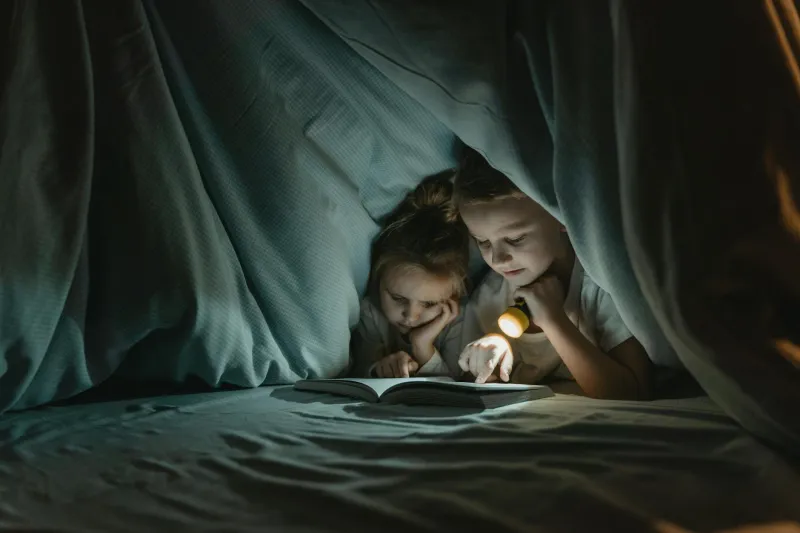
Every American kid knows the drill. You're reading under the covers with a flashlight, completely absorbed in your book, when suddenly the bedroom door opens and a parent's voice cuts through the darkness: "You're going to ruin your eyes reading in the dark like that!" The flashlight gets confiscated, the lights get turned on, and you're left with the firm impression that dim lighting poses a serious threat to your vision.
This scene has played out in millions of households for generations. Parents deliver the warning with absolute certainty, often referencing their own childhood experiences or vague memories of medical advice. The message is clear: reading in poor lighting causes permanent eye damage.
The reality? Optometrists and ophthalmologists have been gently correcting this misconception for decades.
What Actually Happens When You Read in Dim Light
When you strain to read in insufficient lighting, your eyes work harder than usual. The pupils dilate to let in more light, the focusing muscles contract more intensely, and you may blink less frequently as you concentrate on making out the words. This extra effort can cause temporary discomfort — eye strain, headaches, and fatigue.
But temporary discomfort isn't permanent damage.
Dr. Rachel Bishop, an ophthalmologist at the National Eye Institute, explains it simply: "Reading in dim light is like doing bicep curls with heavier weights. Your muscles work harder and may feel tired afterward, but they're not being damaged by the exercise."
The eye strain you experience from reading in poor lighting resolves completely once you rest your eyes or move to better lighting conditions. No lasting harm occurs to the retina, cornea, or any other part of the visual system.
The Science Behind Eye Strain vs. Eye Damage
Understanding the difference between eye strain and eye damage requires looking at how vision actually works. When light enters your eye, it passes through the cornea and lens before hitting the retina, where photoreceptor cells convert light into electrical signals that travel to your brain.
In dim conditions, your eyes make several automatic adjustments:
- Pupils dilate to allow maximum light entry
- Ciliary muscles work harder to focus on close objects
- Blink rate often decreases during intense concentration
- Rod cells in the retina become more active to detect available light
These are normal physiological responses, similar to how your leg muscles work harder when walking uphill. The temporary fatigue that results doesn't indicate tissue damage any more than sore legs after a hike indicate muscle injury.
What Really Causes Vision Problems
Actual vision problems develop from entirely different factors than reading lighting conditions. Myopia (nearsightedness) has strong genetic components and appears linked to lack of outdoor time during childhood development. Presbyopia (difficulty focusing on close objects) results from natural aging of the lens. Cataracts, glaucoma, and macular degeneration stem from age, genetics, disease, or injury — not reading habits.
Some research suggests that prolonged close work, including reading, may contribute to myopia development in children. But this potential connection relates to the distance of reading material from the eyes, not the lighting conditions. Whether you read a book six inches from your face in bright light or dim light, the close focusing distance remains the same.
How the Myth Became Medical "Fact"
The reading-in-dim-light warning appears to have originated from well-intentioned parenting rather than medical research. Before electric lighting became widespread, reading by candlelight or oil lamps was genuinely difficult and often impractical. Parents naturally worried about their children straining to see in inadequate light.
As electric lighting became common in American homes during the early 20th century, the cautionary advice persisted. Parents who had grown up with limited artificial light continued warning their children about the dangers of insufficient illumination, even though electric lights made adequate reading light easily available.
The myth also gained credibility from the obvious discomfort people experience when reading in poor lighting. If your eyes feel tired and strained after reading with a flashlight under covers, it seems logical to assume you're causing damage. The immediate cause-and-effect relationship feels convincing, even though the underlying assumption is incorrect.
Why Eye Doctors Keep Explaining This
Optometrists report that patients regularly ask about reading lighting during routine eye exams. Many adults express guilt about their childhood reading habits, worried they may have damaged their vision by reading under covers or in poorly lit rooms.
Dr. Susan Primo, an optometrist in Atlanta, estimates she addresses this concern with at least three patients per week. "People are genuinely surprised when I tell them that reading in dim light won't hurt their eyes," she says. "They've carried this worry for years, sometimes decades."
 Photo: Dr. Susan Primo, via www.gradyhealth.org
The persistence of this belief creates an interesting challenge for eye care professionals. They must balance reassuring patients that past reading habits didn't cause damage while still encouraging good lighting for comfort and reading efficiency.
The Real Guidelines for Healthy Reading
While reading in dim light won't damage your eyes, proper lighting does make reading more comfortable and efficient. Eye care professionals recommend:
- Positioning light sources to minimize glare and shadows
- Taking regular breaks during extended reading sessions
- Maintaining appropriate distance between eyes and reading material
- Ensuring overall room lighting isn't dramatically darker than your reading light
These guidelines focus on comfort and reading effectiveness rather than preventing eye damage.
Modern Applications of an Old Myth
In today's digital age, the dim-light myth has evolved to include concerns about reading on phones and tablets in dark rooms. Parents now worry about children reading e-books under covers instead of physical books, but the underlying concern remains the same.
Interestingly, digital screens actually provide their own illumination, potentially making reading in dark environments less straining than reading printed material in similar conditions. However, blue light emission from screens has introduced entirely new concerns about digital device usage and sleep patterns.
The Takeaway
The next time you catch yourself or someone else warning about the dangers of reading in dim light, remember that this cautionary tale was never grounded in medical evidence. Your childhood flashlight reading sessions didn't damage your eyes, and neither will reading in less-than-perfect lighting conditions today.
While good lighting makes reading more comfortable, the fear of permanent eye damage from dim lighting can be safely retired alongside other well-intentioned but scientifically unfounded parental warnings. Your eyes are more resilient than generations of worried parents believed.