Eight Glasses a Day: How a Single Misquoted Sentence From 1945 Became America's Hydration Gospel
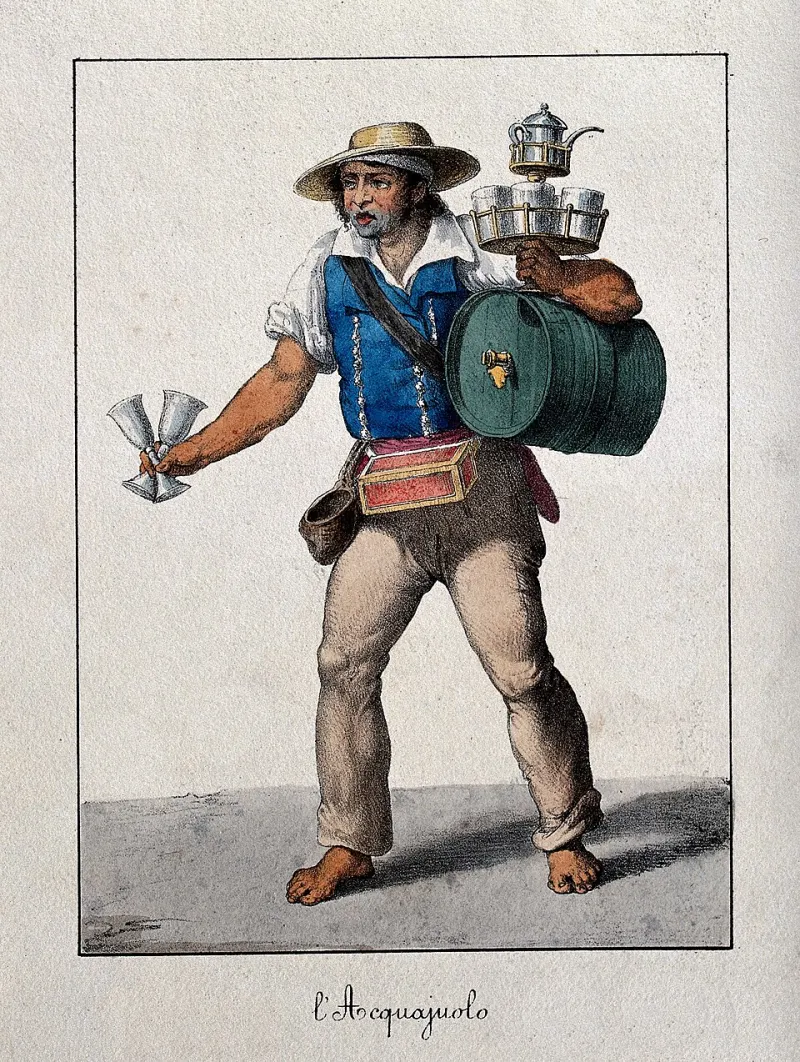
Photo: Unknown, CC BY 4.0, via Wikimedia Commons
The Number That Became a Health Commandment
Ask almost any American how much water they should drink each day and you'll get the same answer: eight glasses. Eight eight-ounce glasses, to be specific — a formula sometimes written as "8x8" in wellness circles. It's treated as settled medical fact, the kind of advice that gets passed from parents to children, printed on the sides of reusable water bottles, and repeated by doctors, coaches, and health columnists as though it has always been obvious.
The number has spawned an entire industry. Hydration tracking apps. Enormous Stanley cups. Motivational water bottles with time markers printed on the side. The assumption that most Americans are chronically dehydrated and need to consciously correct for it is now so embedded in health culture that questioning it feels almost irresponsible.
But the eight-glasses rule traces back to a single paragraph from 1945 — and the sentence that would have prevented the whole misunderstanding was the one everyone dropped.
The Paragraph That Started Everything
In 1945, the United States Food and Nutrition Board published a set of dietary recommendations. Buried in those recommendations was a suggestion that adults consume roughly 2.5 liters of water per day. That number, when converted into eight-ounce servings, lands somewhere around eight glasses.
So far, the math checks out. But the very next sentence in that same document — the one that never made it into the cultural transmission — added a crucial qualifier: most of this quantity is contained in prepared foods.
Read the full paragraph and the recommendation looks completely different. The board wasn't telling Americans to drink eight glasses of water on top of everything else they consumed. It was describing total water intake across all sources, including the water content of fruits, vegetables, soups, coffee, tea, milk, and essentially everything else a person eats and drinks in a day. The eight glasses was never meant to be a standalone drinking goal.
Somewhere in the decades that followed, the qualifier got lost. The number stayed. And by the time it had circulated widely enough to feel like established wisdom, tracing it back to its original context had become almost impossible.
What Hydration Science Actually Says
The medical research on hydration doesn't support a single universal number for daily water intake, and scientists have been fairly consistent about this for years. A 2002 review published in the American Journal of Physiology by Dr. Heinz Valtin specifically examined the eight-glasses claim and found no scientific evidence to support it as a blanket recommendation for healthy adults.
The reason a universal number doesn't work is that water needs vary enormously based on body size, activity level, climate, diet, and individual physiology. A 120-pound woman sitting at a desk in an air-conditioned office has different hydration needs than a 200-pound construction worker in Phoenix in July. Prescribing the same amount of water to both isn't medicine — it's a rough guess.
What research consistently shows is that the human body has a sophisticated, finely tuned mechanism for regulating hydration: thirst. When you need more fluid, you feel thirsty. When you're adequately hydrated, you don't. This system evolved over hundreds of thousands of years and, in healthy adults, works remarkably well.
The Overhydration Problem Nobody Talks About
While the cultural conversation around hydration has focused almost entirely on the dangers of drinking too little, there's a lesser-known risk on the other end: drinking too much.
Hyponatremia — a condition where the sodium concentration in your blood drops too low because of excessive water intake — is a real and occasionally serious medical concern. It's seen most often in endurance athletes who drink large amounts of water during long events, but it can occur in other contexts too. Symptoms range from nausea and headaches to, in severe cases, seizures and loss of consciousness.
The condition received significant attention after several marathon runners died from it in the early 2000s, precisely because they had followed aggressive hydration guidelines that encouraged drinking as much as possible during exercise. The American College of Sports Medicine subsequently revised its guidance to recommend drinking based on thirst rather than on a predetermined schedule.
The overhydration risk is still relatively uncommon in everyday life, but it illustrates a point that gets overlooked in the eight-glasses conversation: more water is not always better, and the body's signals are generally more reliable than a fixed number.
Why the Myth Proved Impossible to Shake
A few forces kept the eight-glasses rule alive long after it should have been revised.
The bottled water industry, which grew dramatically in the 1990s and 2000s, had an obvious commercial interest in the idea that Americans weren't drinking enough. Marketing campaigns reinforced the message that chronic dehydration was widespread and that carrying water at all times was a health necessity. The more people believed they were perpetually under-hydrated, the more water they bought.
The wellness industry built on top of that foundation. Hydration became a pillar of clean living, and eight glasses became a baseline metric — something you could check off a list to feel like you were taking care of yourself. Simple, trackable health habits are appealing, and "drink more water" is about as simple as it gets.
There was also a medical inertia at play. Once advice gets embedded in public health messaging, it tends to persist even when the underlying evidence is questioned. Doctors repeat what they were taught, patients repeat what doctors told them, and the cycle continues.
What to Do With This Information
None of this means you should stop drinking water or ignore hydration. Water is essential for virtually every function in the human body, and there are plenty of people — older adults, athletes, people in hot climates — who genuinely benefit from paying attention to their fluid intake.
But for most healthy adults going about normal daily life, the research suggests that thirst is a more reliable guide than any fixed number. Your urine color is also a useful indicator — pale yellow generally signals adequate hydration; dark yellow suggests you could use more fluid.
The eight glasses isn't dangerous advice for most people. It's just not science. It's a number that got separated from its context, passed through decades of repetition, and arrived in the present day wearing the costume of medical fact.
The sentence that would have changed everything was right there in 1945. It just never made it into the cultural memory.