You're Probably Not as Introverted as You Think — Personality Science Is More Complicated Than Your Myers-Briggs Result

Photo: person alone thinking personality psychology concept, via img.freepik.com
You're Probably Not as Introverted as You Think — Personality Science Is More Complicated Than Your Myers-Briggs Result
At some point in the last decade or so, being an introvert became a personality. Not just a trait — a full identity, complete with merchandise, memes, and a sense of community built around the shared experience of finding parties exhausting and preferring a quiet Friday night at home. Susan Cain's 2012 book Quiet became a cultural phenomenon. TED talks on introversion racked up millions of views. Social media filled with people proudly claiming their introvert status like a badge of honor.
 Photo: Susan Cain, via substackcdn.com
None of that is entirely wrong. But a lot of it is considerably more complicated than the version that went viral — and the gap between the pop-psychology introvert and what behavioral science actually describes is worth understanding.
What the Original Research Actually Said
The introvert-extrovert framework didn't start with personality quizzes or social media self-identification. It goes back to Carl Jung in the early twentieth century, and it was later formalized and studied rigorously by psychologist Hans Eysenck in the 1960s. Eysenck's research treated introversion and extroversion not as two distinct personality types but as opposite ends of a continuous spectrum — a dimension of personality along which people are distributed in a roughly bell-shaped curve.
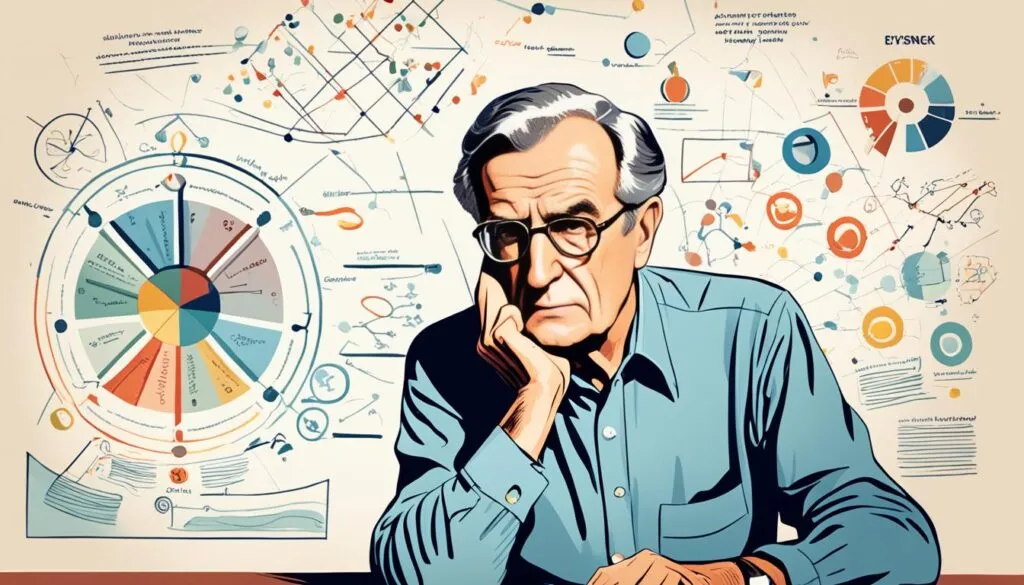 Photo: Hans Eysenck, via enterapiaonline.com
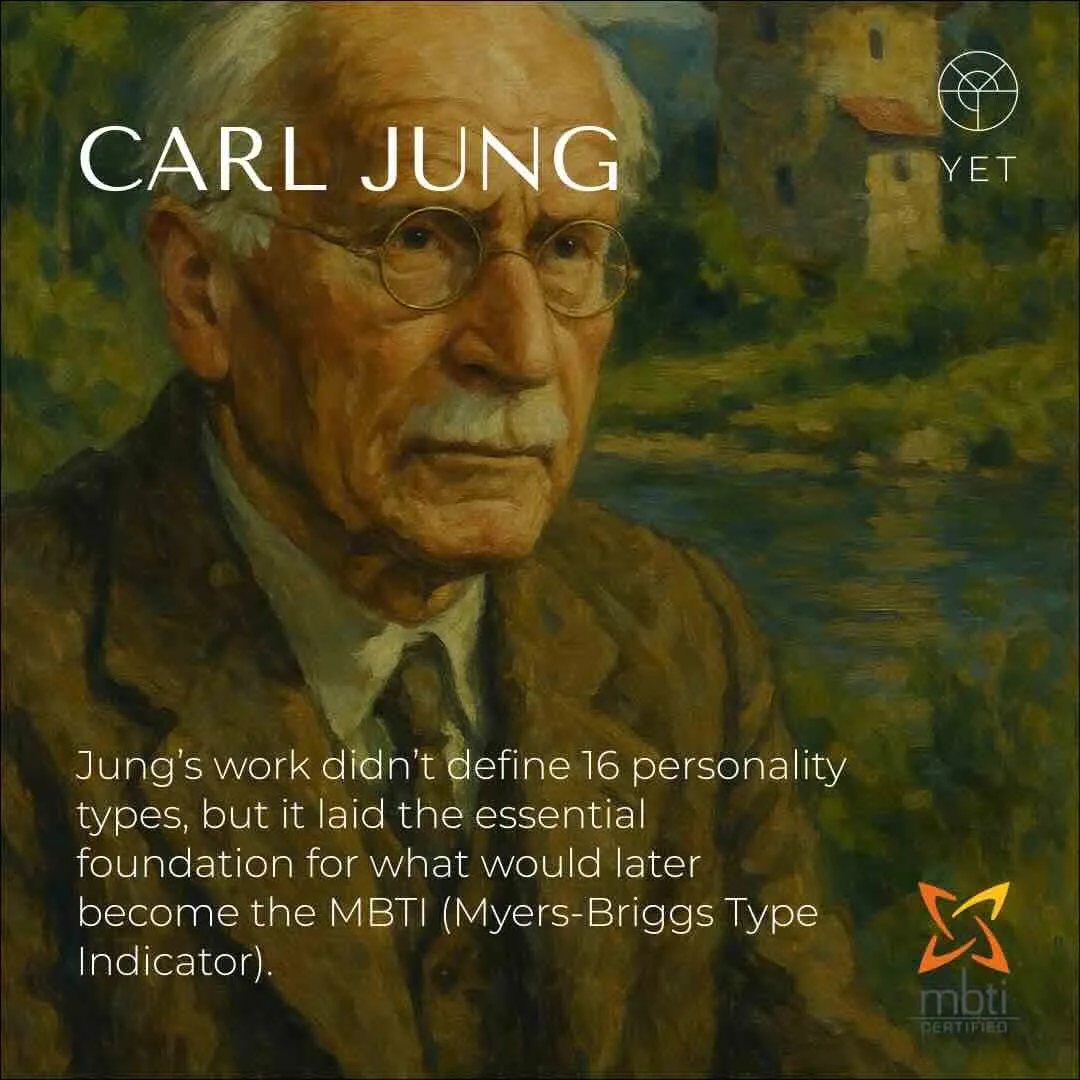 Photo: Carl Jung, via yetmbti.com
That distinction matters enormously. A spectrum means most people don't sit at either extreme. The research consistently shows that the majority of the population falls somewhere in the middle — people who are sometimes energized by social interaction, sometimes drained by it, sometimes gregarious, sometimes deeply content with solitude, depending on context, mood, and circumstance. Psychologists even have a term for this middle range: ambiverts.
The rigid binary — you're either an introvert or an extrovert, full stop — is not what the science describes. It's what happened when a nuanced psychological dimension got filtered through popular culture.
How the Binary Got So Sticky
There are a few forces that turned a spectrum into a sorting hat.
Personality assessments played a significant role. The Myers-Briggs Type Indicator, one of the most widely administered personality tests in the world, sorts respondents into one of sixteen distinct types — and introversion versus extroversion is one of the four primary dimensions it uses. The problem is that Myers-Briggs assigns you to one side or the other regardless of where you actually fall on the spectrum. Someone who scores 51% introverted and 49% extroverted gets labeled an introvert. The test was never designed to reflect the full complexity of personality science, and most academic psychologists have significant reservations about its reliability and validity — but it became enormously popular in corporate HR departments and career counseling, which gave it an authority it arguably didn't earn.
Social media amplified the binary further. Platforms reward content that is relatable and shareable, and "I'm an introvert" is a cleaner, more shareable identity claim than "I tend toward introversion on a personality spectrum, though it varies considerably depending on context." The introvert meme — the person who cancels plans with relief, who finds small talk exhausting, who recharges alone — resonated with a huge number of people who felt seen by it. That resonance is real and meaningful. But resonance isn't the same as scientific precision.
Cain's Quiet deserves credit for bringing genuine research on introversion into a mainstream conversation and for pushing back against a culture that had long over-rewarded extroverted traits in schools and workplaces. The book is thoughtful and well-researched. What happened after the book — the way its ideas got compressed into internet memes and personality quiz results — is where the nuance started to disappear.
What Personality Scientists Actually Measure
Contemporary personality research largely works within a framework called the Big Five — also known as OCEAN, for Openness, Conscientiousness, Extraversion, Agreeableness, and Neuroticism. In this model, extraversion (note the spelling — psychologists typically use this version) is one of five dimensions, and it's measured on a continuous scale, not as a binary.
High extraversion in the Big Five is associated with sociability, assertiveness, and a tendency to seek out stimulating environments. Low extraversion — what we'd colloquially call introversion — is associated with a preference for quieter, less stimulating environments and a tendency toward reflection. But crucially, these are tendencies, not fixed categories. Personality traits in the Big Five model are understood to be relatively stable over time but not immutable, and they interact with each other in complex ways.
One thing the research is pretty clear about: the energy explanation that's become central to the pop-culture introvert narrative — the idea that introverts are drained by social interaction and recharged by solitude while extroverts are the opposite — is a simplification that doesn't hold up cleanly under scrutiny. Studies have found that when introverts are instructed to act more extroverted in social situations, they often report feeling better afterward, not worse. This doesn't mean introversion isn't real — it means the relationship between personality traits and social energy is more complicated than the meme version suggests.
Why People Are So Eager to Claim a Label
There's something genuinely useful about having a framework for understanding your own tendencies. Knowing that you find large parties more draining than one-on-one conversations, or that you do your best thinking alone rather than in brainstorming meetings, is useful self-knowledge. The introvert-extrovert framework, even in its simplified form, gave millions of people a vocabulary for experiences they'd always had but never had words for.
The problem comes when the label stops being a useful approximation and starts being a fixed identity — when people use "I'm an introvert" to explain away behavior that might actually be anxiety, avoidance, or habit rather than personality. Or when someone uses their extrovert identity to justify behaviors that affect other people. Labels that were meant to describe tendencies can quietly become prescriptions for behavior.
Psychologists also point to the Barnum effect — the tendency to accept vague personality descriptions as uniquely accurate — as a reason these labels feel so true. Introvert descriptions are written in ways that resonate with a wide range of people. If you've ever felt overstimulated at a party, the introvert description will feel like it was written about you, even if you also genuinely love parties half the time.
The More Honest Version
You probably have real tendencies in one direction or the other. Those tendencies are worth knowing about. But if you've ever caught yourself declining an invitation because "I'm an introvert" when the more accurate reason might be anxiety, fatigue, or just not wanting to go — the label might be doing more work than it should.
Personality is real. The spectrum is real. The rigid binary is a simplification that made a complicated idea easier to share — and in doing so, made it a little less true.