The Middle Lane Isn't Your Safety Net — Traffic Engineers Explain Why Your Driving School Got It Wrong
The Middle Lane Isn't Your Safety Net — Traffic Engineers Explain Why Your Driving School Got It Wrong
Every day, millions of American drivers merge onto multi-lane highways and immediately gravitate toward the middle lane. It feels logical — you're safely away from merging traffic on the right and aggressive speeders on the left. This "goldilocks zone" approach to highway driving seems like common sense, and it's advice that gets passed down from driving instructors, parents, and even defensive driving courses.
But traffic engineers who study highway safety patterns have been watching this behavior for decades, and they've discovered something counterintuitive: the middle lane camping habit that feels safest is actually creating more dangerous conditions for everyone on the road.
Where the Middle Lane Myth Started
The idea that the middle lane offers maximum safety didn't come from traffic research — it emerged from informal driving culture and well-meaning but oversimplified driving instruction. In the early days of interstate highway expansion, when most highways had just three lanes, the logic seemed straightforward: avoid the chaos of the right lane where trucks merge, and stay out of the left lane where speed demons race.
Driving schools reinforced this thinking because it offered a simple rule for nervous new drivers. "When in doubt, stay in the middle" became an easy-to-remember guideline that reduced decision-making stress during those first months behind the wheel.
The problem is that this advice was designed for individual comfort, not system-wide safety.
What Actually Happens When Everyone Chooses Middle
Transportation researchers at the Federal Highway Administration have been tracking traffic flow patterns since the 1970s, and they've identified a phenomenon they call "lane clustering." When too many drivers choose the same lane for the same reason, it creates exactly the kind of congestion and unpredictability that safety-conscious drivers are trying to avoid.
Here's what happens in practice: moderate-speed drivers pack into the middle lane, creating a slow-moving bottleneck. Faster traffic gets forced into the left lane, even when they're not trying to pass anyone. Meanwhile, the right lane often sits partially empty except for the occasional merging vehicle.
This clustering effect forces drivers to make more frequent lane changes to navigate around the middle-lane traffic jam. And according to the National Highway Traffic Safety Administration, lane-change maneuvers are involved in roughly 10% of all highway crashes — far more than the merging accidents that middle-lane campers are trying to avoid.
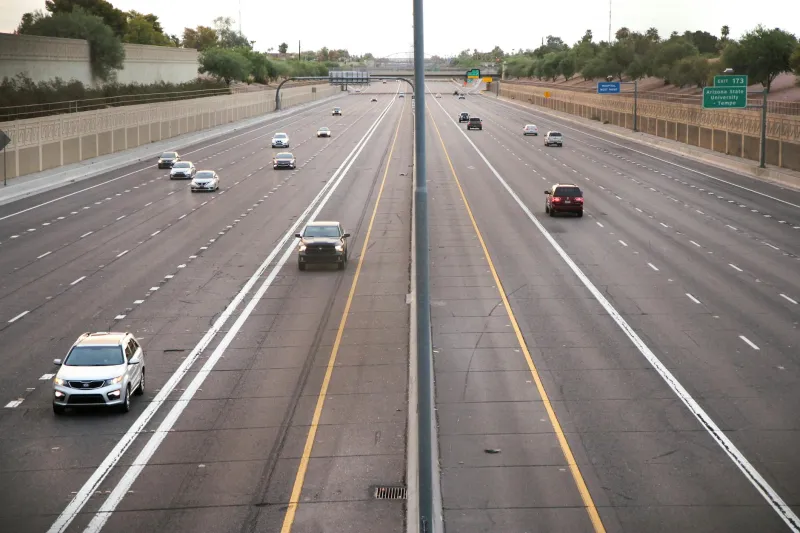
 Photo: National Highway Traffic Safety Administration, via as1.ftcdn.net
The Real Rules of Lane Discipline
Professional driving instructors in countries with stricter lane discipline — like Germany, where highway speeds are often unlimited — teach a completely different approach. The safest highway driving follows what traffic engineers call "lane discipline": use the rightmost lane that allows you to maintain your desired speed safely.
This means if you're driving 65 mph on a highway where traffic generally flows at 70 mph, the right lane is often your safest option, even with occasional merging traffic. You'll make fewer lane changes, encounter fewer speed differentials with surrounding cars, and leave the middle and left lanes available for their intended purpose: passing.
When merging traffic does appear, the solution isn't to avoid the right lane entirely — it's to temporarily adjust your speed or briefly move left to accommodate the merge, then return to the right lane.
Why Your Instincts Fight the Data
The disconnect between what feels safe and what actually is safe comes down to how our brains process risk. Merging traffic feels dangerous because it requires active attention and decision-making. The lane changes and speed adjustments needed to share the right lane feel like work.
Camping in the middle lane feels passive and safe because it reduces the number of immediate decisions you have to make. But this psychological comfort comes at the cost of creating systemic problems that increase accident risk for everyone, including you.
Traffic psychologists have found that drivers consistently overestimate the danger of obvious, visible risks (like merging traffic) while underestimating the danger of subtle, systemic risks (like contributing to congestion patterns that force others into risky maneuvers).
What This Means for Your Daily Commute
The next time you're on a multi-lane highway, try thinking of lanes as tools rather than territories. The right lane isn't a danger zone to be avoided — it's often the most efficient place to be if you're driving at or near the speed limit. The left lane isn't just for speed demons — it's for anyone who needs to pass slower traffic, regardless of their absolute speed.
This doesn't mean you should never use the middle lane. On a busy five-lane highway, the middle lanes serve important functions for drivers who need to maintain speeds between the right-lane traffic and left-lane passers. The key is using them intentionally rather than defaulting to them out of habit.
Traffic engineers emphasize that good highway driving is about reading conditions and adapting, not following rigid rules about which lane is "safest." The safest lane is the one that matches your speed to the flow of traffic around you while minimizing the number of lane changes you need to make.
The irony is that drivers who learn to use the right lane confidently — merging smoothly when needed and maintaining appropriate following distances — often find highway driving less stressful than those who camp in the middle lane and constantly worry about faster traffic passing on both sides.
Your driving instructor's middle-lane advice wasn't wrong for a brand-new driver learning to manage highway speeds. But as traffic patterns have evolved and highway systems have become more complex, the safest approach has evolved too. The real safety net isn't a specific lane — it's understanding how traffic flows and positioning yourself to work with that flow rather than against it.