Gluten-Free Became a Wellness Symbol. Then Nutritionists Started Reading the Ingredient Lists.
Somewhere around 2010, gluten quietly became the villain of American grocery stores. Books climbed bestseller lists warning that wheat was destroying brains and expanding waistlines. Celebrities credited gluten-free diets for energy, weight loss, and mental clarity. By 2019, the gluten-free market in the US had grown into a $5 billion industry, with dedicated aisles in every major supermarket and "GF" labels treated as a mark of nutritional virtue.
The problem is that for the roughly 97 percent of Americans who don't have celiac disease or a confirmed non-celiac gluten sensitivity, the science supporting those health claims has never really materialized. And when nutrition researchers started systematically comparing gluten-free packaged products to their conventional equivalents, what they found complicated the wellness narrative considerably.
What Gluten Actually Is — and Who Actually Needs to Avoid It
Gluten is a protein found in wheat, barley, and rye. For people with celiac disease — an autoimmune condition affecting roughly 1 percent of the US population — consuming gluten triggers an immune response that damages the small intestine, leading to serious nutritional deficiencies and long-term health complications. For this group, a strict gluten-free diet isn't a lifestyle preference. It's a medical necessity.
A somewhat larger group, estimated at around 6 percent of Americans, may experience what researchers call non-celiac gluten sensitivity — symptoms like bloating, fatigue, or brain fog that appear connected to gluten consumption but don't involve the intestinal damage seen in celiac disease. Even here, the science is genuinely unsettled. Some researchers have suggested that the real culprit for many of these individuals may be a separate class of carbohydrates called FODMAPs, which are common in wheat but aren't gluten itself.
For everyone else — the majority of the people filling their carts with gluten-free pasta and crackers — the evidence for any meaningful health benefit is thin.
The Label Says Gluten-Free. The Ingredient List Tells a Different Story.
Here's where the gap between perception and reality gets nutritionally interesting. When food manufacturers remove gluten from a product, they face a real engineering problem. Gluten is responsible for the elastic, chewy texture in bread, pasta, and baked goods. Take it out and you're left with something that crumbles, falls apart, or tastes like cardboard.
To compensate, manufacturers typically reach for a combination of refined starches — rice flour, tapioca starch, potato starch — along with added sugars, fats, and sodium to restore palatability. The result is a product that often has a worse nutritional profile than the original, not a better one.
A 2018 analysis published in the journal Nutrients compared the nutritional content of gluten-free products across multiple food categories with their conventional counterparts. The gluten-free versions had significantly higher fat and sugar content in several categories, including bread and breakfast cereals. A separate Canadian study examining over 3,000 products found that gluten-free foods were less likely to be good sources of protein and fiber, and more likely to carry higher calorie counts per serving.
The irony is pointed: a product marketed under a health halo often delivers a nutritional profile that a registered dietitian would flag as less desirable, not more.
How a Medical Diet Became a Marketing Category
The transformation of gluten-free from a clinical necessity into a mainstream wellness trend followed a familiar path. A few high-profile books — most notably Wheat Belly in 2011 and Grain Brain in 2013 — made sweeping claims about wheat's role in everything from obesity to Alzheimer's disease. The claims were largely not supported by the peer-reviewed literature, but they were compelling, and they landed in a cultural moment when Americans were already primed to distrust processed foods and look for dietary explanations for chronic health problems.
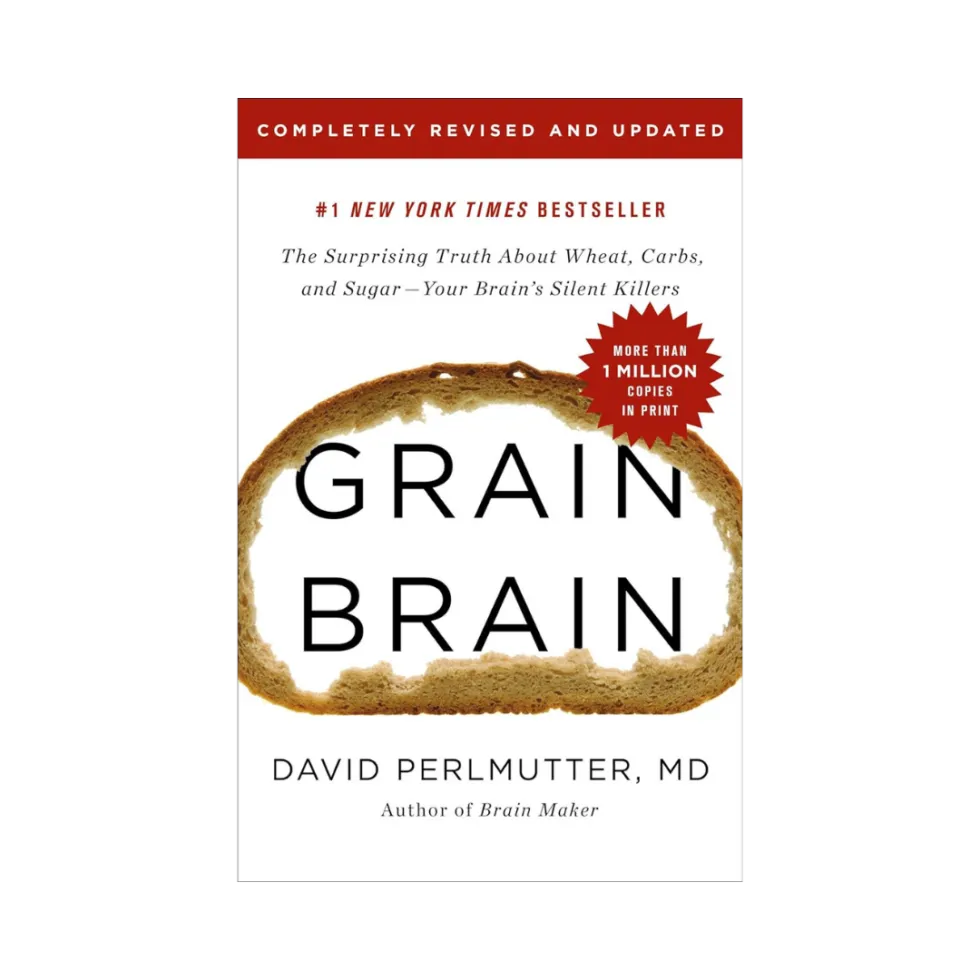 Photo: Grain Brain, via doctorhealonline.com
Celebrity endorsements accelerated the trend. When athletes and entertainers credited gluten-free eating for improved performance or weight loss, the testimonials carried more cultural weight than epidemiological studies. And once food manufacturers recognized the market, the "gluten-free" label proliferated onto products — water, candy, potato chips — that never contained gluten in the first place, further reinforcing the idea that the label was synonymous with health.
The nocebo effect may also play a role in why so many people report feeling better after going gluten-free. When someone believes they've eliminated a harmful substance from their diet, they often feel better regardless of whether the substance was actually causing harm. Simultaneously, going gluten-free typically prompts people to pay more attention to what they eat overall, cut back on processed foods, and cook more at home — changes that would improve most people's health with or without any change in gluten intake.
What the Research Actually Supports
For people with celiac disease, gluten-free eating is unambiguously the right choice — full stop. For those with confirmed non-celiac sensitivity, avoidance may offer genuine symptom relief, though working with a physician to rule out other causes is worthwhile.
For the broader population, a 2017 study published in BMJ actually raised a cautionary note: because whole grains containing gluten are associated with reduced cardiovascular risk, unnecessarily avoiding them could have long-term downsides for heart health.
None of this means gluten-free products are harmful. But eating a gluten-free brownie isn't a health decision in the same way that eating a piece of whole-grain bread isn't a health risk — for most people. The label describes an ingredient profile, not a nutritional quality rating.
The Takeaway
Gluten-free eating saves lives for people who genuinely need it. For everyone else, the evidence for any health upgrade is largely absent, and the packaged foods that carry the label are often nutritionally inferior to what they replace. If you feel genuinely better without gluten and your doctor has confirmed a sensitivity, that's a real and valid reason to keep avoiding it. But if you've been buying gluten-free crackers because the label felt healthier — it might be worth flipping the box over and reading the nutrition facts first.