Monday Morning Doesn't Hate You — Your Work Schedule Just Wasn't Built for Your Biology
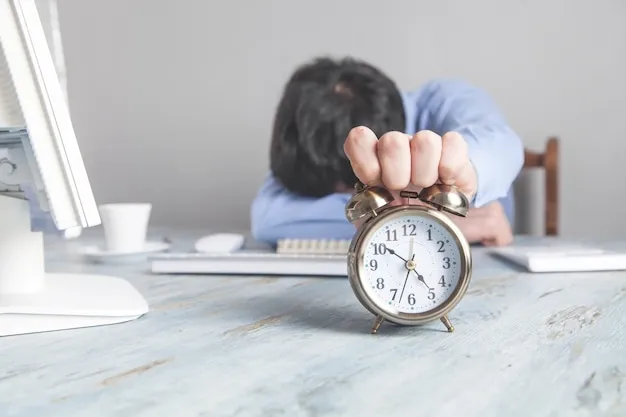
Photo: tired person alarm clock morning work commute, via img.freepik.com
The Feeling Everyone Recognizes but Nobody Has a Name For
You sleep in on Saturday and Sunday — maybe an extra hour, maybe two — and it feels like the most natural thing in the world. Then Monday arrives, the alarm goes off at 6:30, and your body responds like you've just landed in a different time zone. The grogginess is thick. Coffee helps, but only so much. By mid-morning you're functional, but something feels slightly off, like the world is running about 90 minutes ahead of where your brain thinks it should be.
This is not a willpower problem. It's not a sign that you need more discipline or an earlier bedtime. It's a documented biological phenomenon that researchers have been studying for decades, and it has a name: social jet lag.
The term was coined by chronobiologist Till Roenneberg at Ludwig Maximilian University of Munich, who spent years collecting sleep data from tens of thousands of people across Europe and North America. What he found reshaped how sleep scientists think about fatigue, productivity, and the very structure of the modern workday.
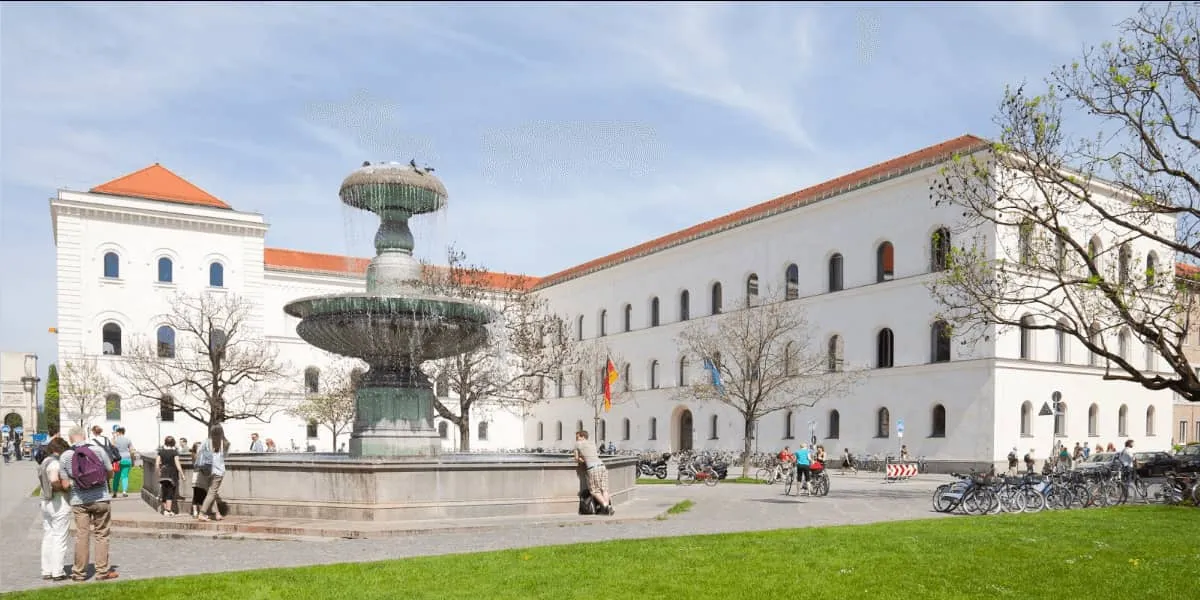 Photo: Ludwig Maximilian University of Munich, via static.yocket.in
 Photo: Till Roenneberg, via c8.alamy.com
Your Body Has Its Own Clock — And It Doesn't Care About Your Calendar
Every human being has a circadian rhythm — an internal biological clock that regulates sleep, wakefulness, hormone release, body temperature, and dozens of other physiological processes on a roughly 24-hour cycle. That clock is largely set by genetics, light exposure, and age. It is not set by when your job starts.
Here's the part most people don't know: there is enormous natural variation in when individual circadian clocks are timed. Some people are genuinely early risers — their biology is calibrated to feel alert at 6 AM and sleepy by 10 PM. Others are naturally wired to feel most alert later in the day and struggle to fall asleep before midnight. Scientists call these chronotypes, and the variation between them is real, measurable, and largely outside any individual's control.
The problem is that most American workplaces operate on a schedule designed for the early end of that spectrum — or more accurately, designed for an industrial-era economy that needed factory floors staffed at dawn. The 9-to-5 model wasn't built around human biology. It was built around shift schedules and daylight hours in manufacturing plants.
For roughly a third to half of the population, that schedule is genuinely misaligned with their natural sleep timing. For teenagers and young adults, the misalignment is particularly severe — adolescent circadian rhythms shift later during puberty, which is why high school students who can't get up at 7 AM aren't being lazy. Their biology is working exactly as designed.
What Social Jet Lag Actually Does to Your Body
Regular jet lag happens when you travel across time zones and your internal clock temporarily disagrees with local time. Social jet lag is the same mechanism, triggered not by a transatlantic flight but by the difference between when you naturally want to sleep and when your schedule forces you to wake up.
During the week, many people accumulate what researchers call sleep debt — they're waking up before their bodies are ready, day after day. On weekends, they recover by sleeping later, which feels good in the moment but effectively shifts their internal clock in the same way staying up late in a new time zone does. Then Monday comes, and the whole cycle resets.
The physiological consequences go beyond feeling tired. Research published in the journal Current Biology linked social jet lag to higher rates of obesity, metabolic disruption, and increased cardiovascular risk. A 2019 study from the University of Arizona found that each hour of social jet lag was associated with a 11 percent greater likelihood of heart disease. Other studies have connected it to increased rates of depression, impaired immune function, and reduced cognitive performance — including the kind of foggy thinking and poor decision-making that people routinely attribute to stress or diet.
 Photo: University of Arizona, via c8.alamy.com
In other words, the condition is doing real biological damage, and most people experiencing it have no idea it has a name, let alone a measurable health impact.
Why Workplaces Have Been Slow to Respond
The evidence is not new. Chronobiology has been documenting the mismatch between biological sleep timing and work schedules for decades. Some European countries and a handful of American school districts have experimented with later start times, and the results are consistently positive — students sleep more, perform better, and report lower rates of depression.
But for adult workplaces, change has been almost nonexistent. The reasons are familiar: management culture that equates early hours with productivity, logistical challenges of coordinating schedules across teams, and a deeply ingrained belief that morning alertness is simply a matter of going to bed earlier.
The science says otherwise. You cannot reliably shift a late chronotype to an early one through willpower or routine alone. Light therapy, carefully timed caffeine consumption, and gradual schedule adjustments can help at the margins, but for many people the mismatch is a structural feature of their biology, not a habit to be corrected.
Flexible start times, remote work options, and asynchronous scheduling — all of which expanded significantly during the pandemic — have inadvertently given many workers the ability to align their schedules more closely with their natural rhythms. Research on those workers shows measurable improvements in sleep quality, mood, and output.
The Takeaway That's Harder to Hear Than It Should Be
The next time you drag yourself through a Monday morning and wonder what's wrong with you, consider the possibility that nothing is wrong with you. Your biology is doing exactly what it was built to do. The schedule is the problem.
That's not an excuse to skip work. But it is a reason to take seriously the growing body of evidence that how we structure the American workday is costing workers their health — and costing employers the productivity they think they're protecting by keeping the 9 AM start time sacred.