Grief Doesn't Follow a Script — And a Psychiatrist's Own Research Proves It

Photo: Cynthia Magana cynthmag, CC0, via Wikimedia Commons
Grief Doesn't Follow a Script — And a Psychiatrist's Own Research Proves It
Somewhere along the way, Americans became convinced that grief was a process with steps. Deny it first, then get angry, then bargain with the universe, then sink into sadness, and finally — if you do it right — arrive at acceptance. The framework is so embedded in popular culture that people who don't move through it in order often wonder if something is wrong with them. Therapists hear it constantly: Why am I still angry? Shouldn't I be at acceptance by now?
The short answer is that the "stages of grief" were never designed to work that way. The longer answer reveals how a genuinely important piece of clinical research got flattened into a self-help formula — and why letting go of it might actually help people grieve better.
Where the Model Actually Came From
Elisabeth Kübler-Ross was a Swiss-American psychiatrist working in Chicago in the 1960s, and her concern was not grief in the way most people think of it. She was focused on the experience of dying itself — specifically, on terminally ill patients who were being largely ignored by a medical system that didn't know how to talk to people who weren't going to get better.
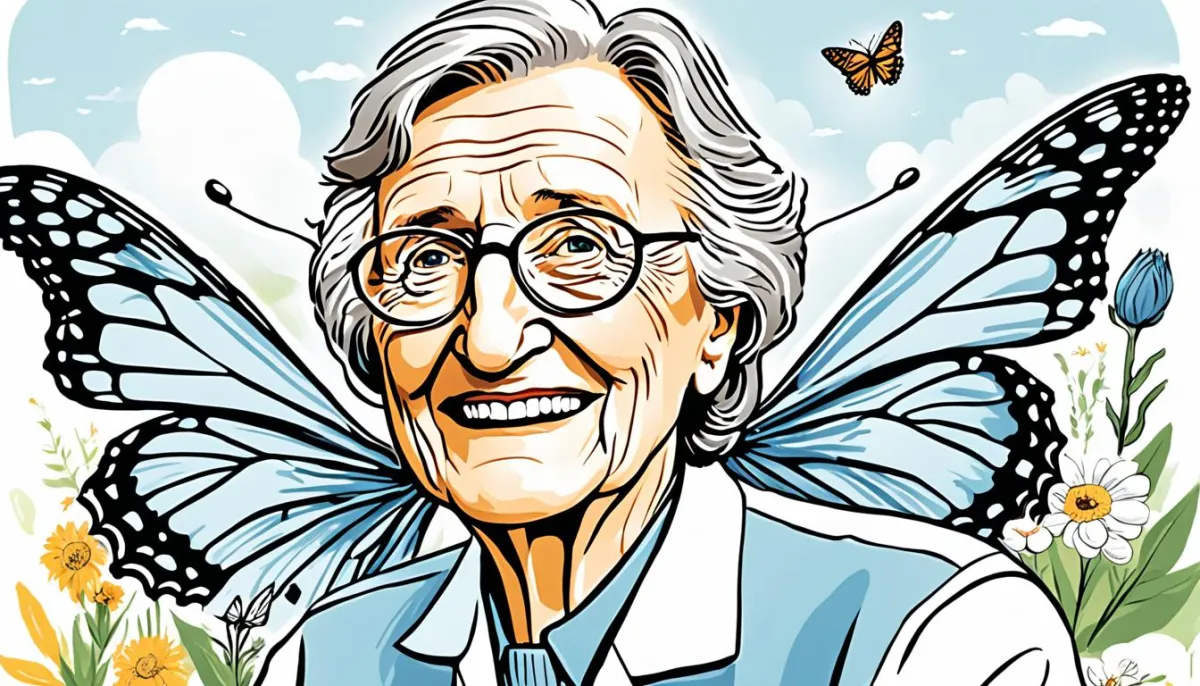 Photo: Elisabeth Kübler-Ross, via enterapiaonline.com
Her landmark 1969 book, On Death and Dying, documented interviews with hundreds of those patients. The five stages she described — denial, anger, bargaining, depression, and acceptance — were patterns she observed in people confronting their own mortality. They were never presented as a rigid sequence. Kübler-Ross herself wrote that the stages could overlap, repeat, or skip entirely. She was describing emotional themes, not a checklist.
The leap from "what dying people sometimes feel" to "what everyone who loses someone should experience, in order" happened largely without her endorsement. By the time the book became a cultural touchstone, the nuance had been left behind.
What Grief Researchers Have Found Since
Decades of psychological research have painted a picture of grief that looks almost nothing like a tidy five-act progression.
George Bonanno, a clinical psychologist at Columbia University, has spent years studying bereavement and found that the most common response to loss is not a dramatic descent through predictable stages — it's resilience. Many people, he found, experience intense sadness and difficulty in the short term but return to baseline functioning without passing through identifiable stages at all. His research, published across multiple peer-reviewed studies, challenged the assumption that anyone who didn't show prolonged visible grief was somehow suppressing something or in denial.
 Photo: George Bonanno, via i.ytimg.com
Other researchers have documented what's called "grief bursts" — sudden waves of intense emotion that can arrive months or years after a loss, completely out of sequence with any model. Some people feel acceptance early and anger much later. Some cycle through the same feelings repeatedly for years. Some experience profound grief over losses the culture doesn't fully recognize, like miscarriages, estranged relationships, or the death of a pet.
The American Psychological Association has moved away from stage-based frameworks in recent years, favoring models that emphasize grief as a deeply individual, nonlinear process shaped by personality, relationship history, cultural background, and the specific nature of the loss.
Why the Five Stages Stuck Around
There's something genuinely comforting about the idea that suffering has a shape — that if you just move through the right rooms, you'll come out the other side. Kübler-Ross's framework arrived at a moment when death was a topic most Americans actively avoided, and it gave people a language for something they'd been struggling to name.
The model also spread through television, film, and eventually the internet in ways that stripped out its original clinical context. By the time it showed up in sitcoms and grief support pamphlets, it had been simplified to the point of distortion. Even well-meaning therapists sometimes introduced it to clients as a roadmap rather than a loose reference point.
There's also the matter of cultural fit. American culture tends to favor productivity and forward motion — the idea that grief is something you work through resonated with a society that's uncomfortable with open-ended sadness. Stages imply progress. Progress implies an end point. That's a reassuring story, even if the research doesn't support it.
What Actually Helps
Modern grief counselors are increasingly focused on something called "continuing bonds" — the idea that healthy grieving isn't about detaching from the person you lost but about finding a new relationship with their memory. That's a significant departure from older models that treated attachment as something to be resolved.
Therapists also emphasize that there is no universal timeline. Someone who seems "fine" two weeks after a loss isn't broken. Someone who is still struggling two years later isn't stuck — they may be dealing with a complicated loss that requires more support, and that's a clinical matter, not a moral failing.
The most useful thing the five-stage model ever did was give people permission to feel things they thought they weren't supposed to feel. That part is worth keeping. The idea that those feelings need to arrive in a particular order, or that not reaching "acceptance" means you've failed at grief — that part the research has quietly retired.
The Takeaway
Elisabeth Kübler-Ross gave the world a vocabulary for one of its hardest experiences, and that matters. But the model was built on a specific population, in a specific context, and was never meant to serve as a universal emotional timeline. If your grief doesn't match the five stages — if it loops back, skips ahead, or refuses to resolve on schedule — you're not doing it wrong. You're just doing it the way grief actually works.