That 'Natural' Sticker on Your Grocery Cart Doesn't Mean What You Think — Because Nobody Ever Decided What It Means
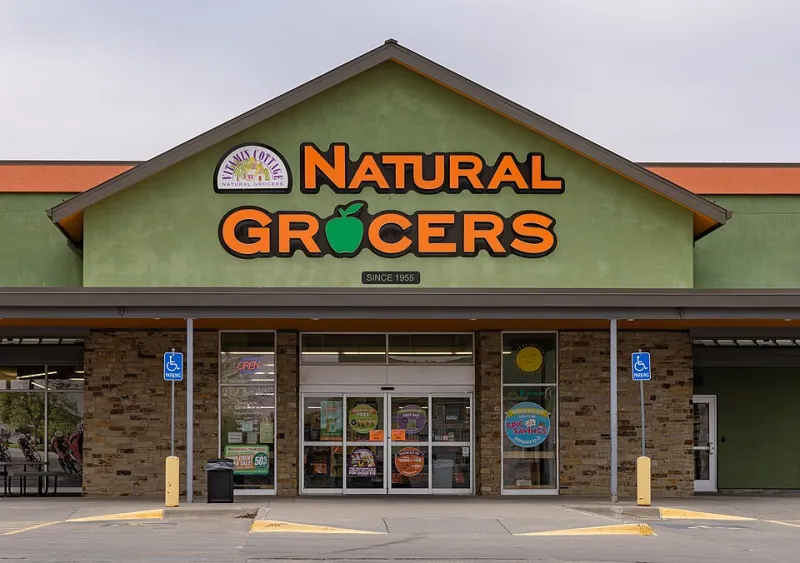
Photo: Tony Webster, CC BY 2.0, via Wikimedia Commons
That 'Natural' Sticker on Your Grocery Cart Doesn't Mean What You Think — Because Nobody Ever Decided What It Means
Walk through any grocery store in America and "natural" is everywhere. It's on the granola bars, the chicken packaging, the potato chips, the juice boxes. It appears in large, reassuring fonts, often surrounded by imagery of sunlight and open fields. Shoppers reach for these products with a reasonable assumption: that the word means something. That some standard was met. That someone checked.
Here's the uncomfortable truth. For food sold in the United States, the FDA has never formally defined what "natural" means. The word is, in regulatory terms, largely unguarded — and the gap between what consumers expect and what manufacturers are actually required to deliver is wider than most people realize.
The Regulatory Vacuum That Built a Billion-Dollar Label
The FDA's official position on "natural" has been, for most of its history, something close to a shrug. The agency issued informal guidance back in 1991 suggesting that it wouldn't object to the use of "natural" on a food label as long as the product contained no added color, artificial flavors, or synthetic substances. Note the word "suggesting." That guidance was never a formal rule. It was never codified. It created no enforcement mechanism.
What that means in practice is that food manufacturers have operated in a wide gray zone for decades. A product containing high-fructose corn syrup — a heavily processed ingredient derived from corn — has appeared on shelves labeled "natural." Foods made with pesticide-treated crops, with chemically processed oils, with ingredients that bear almost no resemblance to anything you'd find in a garden, have all worn the label without legal consequence.
The USDA does apply a slightly more specific standard for meat and poultry: products labeled "natural" must be minimally processed and contain no artificial ingredients. But that covers a narrow slice of the grocery store. For the overwhelming majority of packaged food, the FDA's informal, unenforced guidance is all that stands between the word and whatever a marketing team decides to put on a label.
How This Became Such a Mess
The story of how "natural" became one of the most powerful — and least meaningful — words in American food marketing involves a fairly predictable combination of industry lobbying, regulatory caution, and consumer psychology.
Starting in the 1980s and accelerating through the 1990s, health-conscious eating began moving from the margins into the mainstream. Shoppers wanted cleaner food. They were suspicious of additives and processing. The food industry, recognizing an enormous market opportunity, responded with labeling — and "natural" turned out to be the perfect word. It evoked something positive and wholesome without actually committing to anything specific.
When consumer groups and advocacy organizations pushed for a formal definition, they ran into a wall of industry resistance. Defining "natural" with any real rigor would have forced manufacturers to reformulate products or remove the label from items that were selling extremely well. The financial stakes were enormous. Lobbying efforts consistently emphasized the complexity of defining a word that, they argued, meant different things in different contexts.
The FDA, for its part, proved reluctant to wade into the fight. Formal rulemaking is slow, resource-intensive, and politically contentious. The agency had bigger regulatory battles to fight. And so the informal guidance from 1991 persisted, year after year, while "natural" became one of the most profitable words in the supermarket.
The FDA Tried to Fix This — Then Mostly Stopped
In 2015, the FDA did something that looked like progress. The agency formally requested public comment on whether and how to define "natural" for food labeling purposes. They received over 7,600 responses. The comment period generated substantial input from consumer groups, food manufacturers, scientists, and advocacy organizations.
Then things stalled. The agency published a summary of the comments in 2016, acknowledged the complexity of the issue, and indicated that defining "natural" would require significant additional consideration. As of the mid-2020s, no formal rule has been issued. The informal 1991 guidance remains the closest thing to an official standard. The label continues to appear on products across every aisle of the American grocery store, carrying the same implied promise and the same lack of regulatory backing.
How It Compares to 'Organic'
The contrast with "organic" is instructive. The USDA's National Organic Program, established under the Organic Foods Production Act of 1990, created a genuine certification system. Products labeled "USDA Organic" must meet specific standards governing farming practices, prohibited substances, and processing methods. Farms and facilities are inspected. Certifying agents are accredited. Misuse of the label is a federal violation.
Organic certification isn't perfect — there are ongoing debates about loopholes, enforcement gaps, and whether the standards have been diluted over time — but it represents a fundamentally different kind of claim than "natural." When you see the USDA Organic seal, something was actually verified. When you see "natural," you are largely relying on the manufacturer's own interpretation of a word that no federal agency has formally defined.
This distinction matters enormously at the checkout line, where "natural" products often carry premium pricing that implies a level of quality or purity the label simply doesn't guarantee.
What Shoppers Can Actually Do
The practical takeaway here isn't to distrust every product with "natural" on the label — some of those products genuinely do contain simple, minimally processed ingredients. The takeaway is to stop letting the word do the work for you.
If you care about what's in your food, the ingredient list is more useful than any front-of-package claim. "Natural" tells you what a marketing team decided to print. The ingredient list tells you what's actually inside.
For shoppers who want third-party verification of farming and processing practices, USDA Organic certification remains the most meaningful regulated option available. It's not a perfect system, but it's a real one — which puts it in a different category entirely from a word that, after decades of consumer pressure and regulatory deliberation, still doesn't have a legal definition.