The Tongue Map Every American Kid Drew in Science Class Was Based on a Translation Error
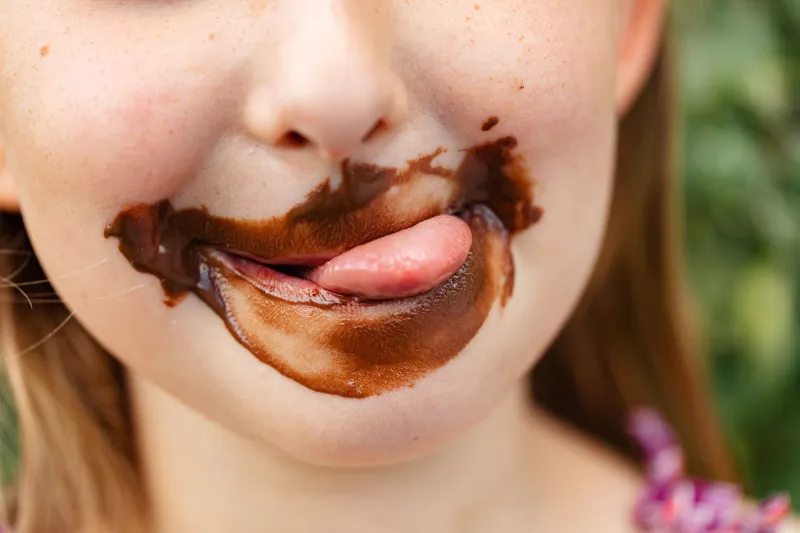
There's a good chance you can still picture it: that pink oval divided into neat zones, each section shaded a different color, each color standing for a different taste. Sweet at the very tip. Bitter lurking at the back. Salty and sour claiming the sides. It was presented as settled biology, the kind of thing you memorized for a quiz and never thought to question.
The problem? That map was built on a mistake — and the science correcting it has been available for decades.
Where the Map Actually Came From
The tongue map's origin story is less "groundbreaking discovery" and more "academic game of telephone gone wrong."
In 1901, a German scientist named D.P. Hanig published a research paper examining taste sensitivity across different regions of the tongue. His findings were modest and carefully worded: certain areas of the tongue appeared to be slightly more sensitive to certain tastes than others. Slight differences. Subtle variations. Nothing remotely like the hard-bordered zones that would eventually appear in American textbooks.
 Photo: D.P. Hanig, via imgv2-1-f.scribdassets.com
Decades later, a researcher named Edwin Boring translated and interpreted Hanig's work for an English-language audience. In that translation, the nuance got lost. The gentle gradients Hanig described became rigid, clearly defined regions. A map that was never meant to be absolute became a classroom diagram that generations of American students accepted as anatomical fact.
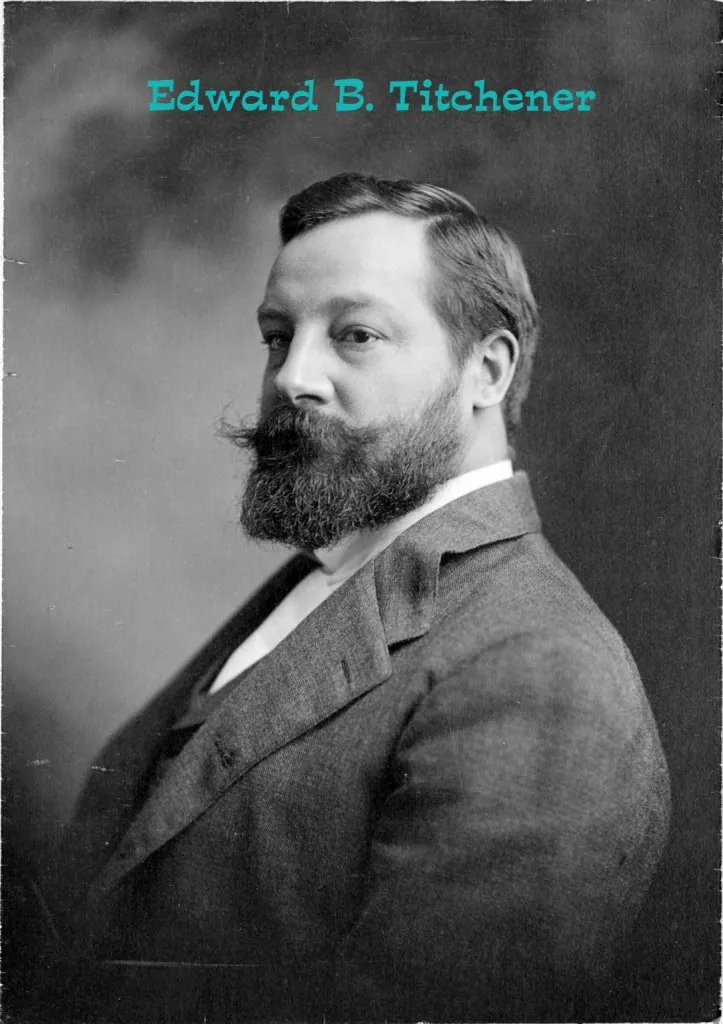 Photo: Edwin Boring, via i0.wp.com
By the time anyone looked closely enough to challenge it, the image had already made its way into millions of textbooks, science kits, and school posters.
What Your Tongue Is Actually Doing
Here's what the research — starting seriously in the 1970s and accelerating through the 1990s and 2000s — actually shows.
Taste receptor cells are distributed across the entire surface of the tongue. There is no exclusive sweet zone at the tip. There is no bitter fortress at the back. Every region of your tongue is capable of detecting every basic taste. The differences in sensitivity that Hanig originally observed were real but so small that they have almost no practical meaning for how you actually experience food.
And about those "basic tastes" — there aren't four of them. There are five.
Umami, the savory, deeply satisfying quality found in foods like aged cheese, mushrooms, soy sauce, and meat, was identified by Japanese chemist Kikunae Ikeda back in 1908. Western science was slow to formally recognize it, but by the early 2000s, researchers had confirmed that humans have specific taste receptors dedicated to detecting glutamate — the compound responsible for umami. It was officially accepted as the fifth basic taste.
So the map was wrong about where tastes are detected, and it was also missing an entire category of flavor entirely.
Why It Took So Long to Fix
You might wonder how a diagram this flawed survived in American classrooms for nearly a hundred years. The answer has less to do with stubbornness and more to do with how educational materials actually get updated — which is slowly, expensively, and inconsistently.
Textbook publishing cycles run long. A science book adopted by a school district might stay in classrooms for ten or fifteen years before a new edition is purchased. Curriculum standards are set at the state level and updated on their own unpredictable schedules. By the time a scientific correction filters through academic journals, into science education standards, and finally into the books sitting on classroom shelves, a generation of students may have already moved through the system.
There's also something deeply human going on here. Once you learn something as a child — especially something visual, something you colored in yourself — it tends to stick. The tongue map feels intuitive. It's neat and organized in a way that real biology rarely is. Our brains are naturally drawn to clean categories, and the map delivers exactly that. The messier truth, that taste receptors are scattered everywhere and that flavor perception involves your nose, your brain, and signals we're still working to fully understand, is harder to reduce to a classroom activity.
The Bigger Picture
Taste perception turns out to be far more complicated than any map could capture. Flavor isn't just about what lands on your tongue — it's a full sensory experience. Smell contributes enormously, which is why food tastes flat when your nose is congested. Temperature affects how strongly you perceive sweetness. Even the color of a plate can influence how a dish tastes, according to research in a field called crossmodal perception.
Some researchers now believe there may be additional basic tastes beyond the current five. Fat, starchiness, and even the sensation of carbonation are being studied as candidates. The tongue isn't a static map. It's a dynamic system that science is still actively working to understand.
The corrected science has been in university-level biology courses for years. Most nutrition programs and culinary schools have moved on entirely. But ask a random adult American to describe the tongue map, and many will still sketch out that same four-zone diagram from memory — sweet at the tip, bitter at the back — exactly as they were taught.
What to Take Away
The tongue map story isn't really about one bad diagram. It's about how easily a simplified image, once embedded in childhood education, can outlast the science it was based on. Hanig's original findings were nuanced. The translation flattened them. The textbooks ran with the flattened version. And somewhere along the way, the map stopped being a rough approximation and started being treated as fact.
Your tongue can taste everything, everywhere. It always could. The map just never told you that.